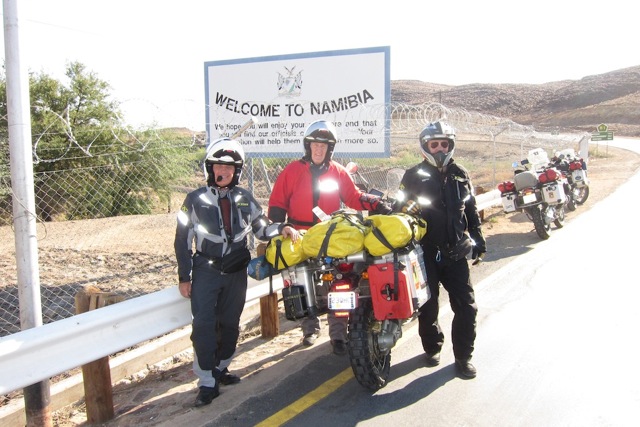
Namibia has an unusually large disparity between the “haves” and the “have-nots.” In the background of this photo, the shacks are in barren desert.
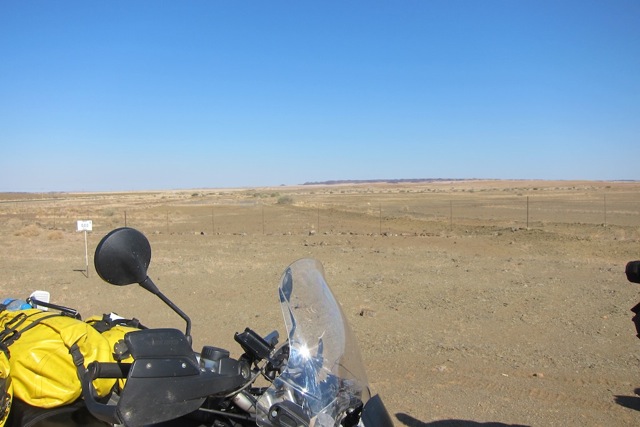
We will be off-roading from now on, so we lowered our tire pressure to 30 lbs. We had our first experience with riding on loosely packed gravel and sand. It was rough going, but arriving at the beautiful lodge made it all seem worth it.
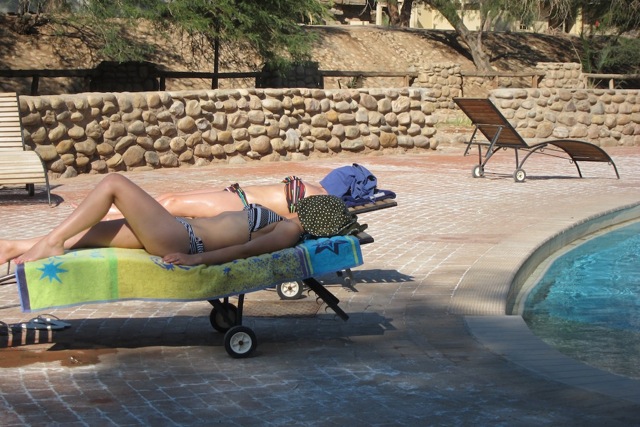
Flotsam and jetsam by the pool:
I’m having major problems with my camera system. I have cameras mounted on my helmet, pointing to the front and back, but the system has a tendency to turn itself off at very inopportune times. On one occasion there was an ostrich running alongside me only five feet away. He was thinking about crossing in front of me but didn’t have the nerve. I thought I was capturing this on film but it didn’t work out. So frustrating. We took a ride out to Fish River Canyon. Compared to the Grand Canyon, the geologic formation is small, but it is rather dramatic. The canyon was formed by the movement of tectonic plates when Africa and South America were still one continent; later, the canyon was further eroded away by the Fish River, which now flows intermittently in late summer.
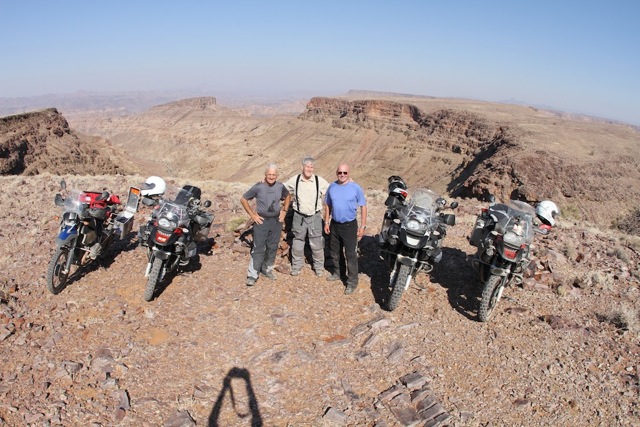
We spent two days at Canyon Lodge and had some interesting off-road riding studded with big rocks and variable conditions—a perfect way to practice for the dirt, sand and rutted roads that will follow.
We stopped at a lovely restaurant along the way with lots of antique cars.
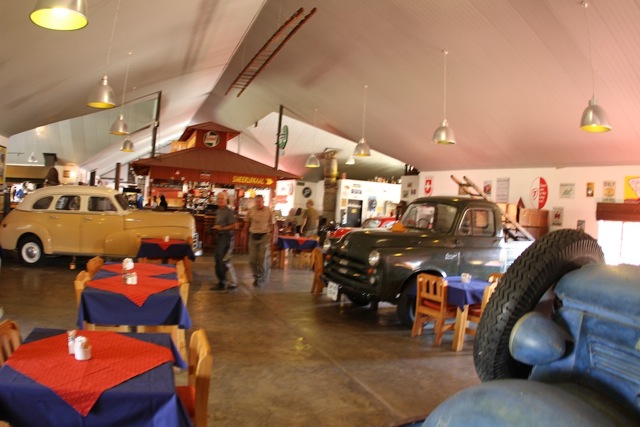
When the box on this poster is opened, a loud alarm sounds in the restaurant so that diners can see the inappropriate gentlemen leaving the bathroom in a walk of shame.

We left Canyon Lodge and moved on to Sesriem, where we stayed at a fancy eco-lodge.

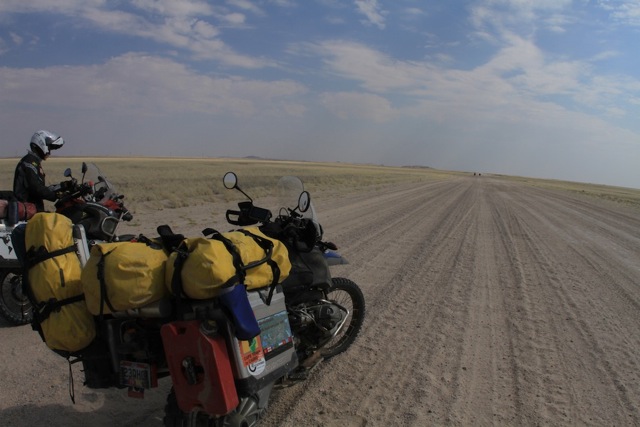
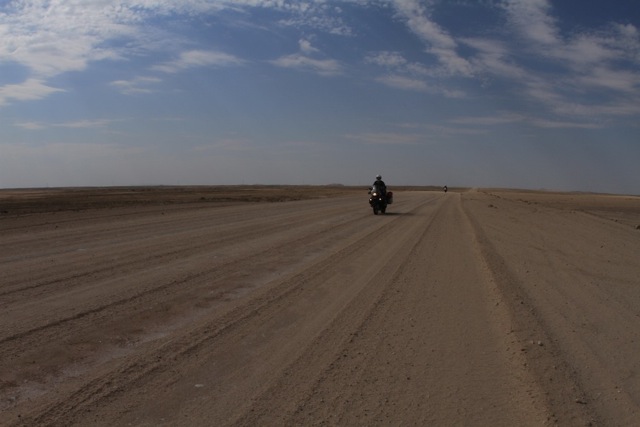
We covered 300 miles on a rutted dirt road—truly a come-to-Jesus experience. When moving fast, the motorcycle’s front tire catches the sand and pulls the wheel. Inevitably, you are following a track left by cars with gravel piled up on either side. We have to be tense at all times.
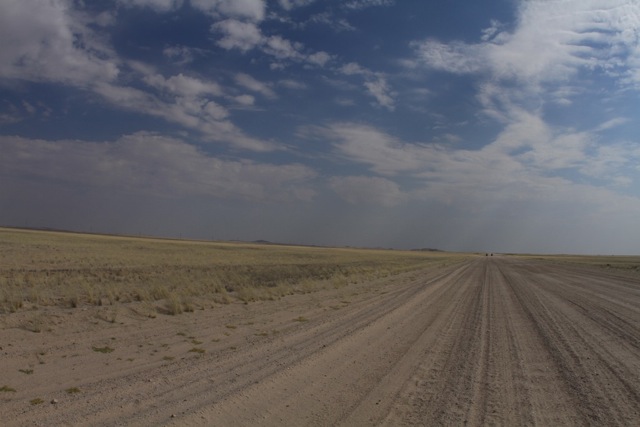
Riding roads like these reminds me of the old adage about sled dogs: “For the dogs in back, the scene never changes.” Here you have to concentrate so much on the road that you cannot look around you. If an enormous large-toothed predator decided to leap at us out of the desert, we wouldn’t see it coming.
At Sesriem, we saw the world’s largest dunes. “Big Daddy” is 1200 feet high.
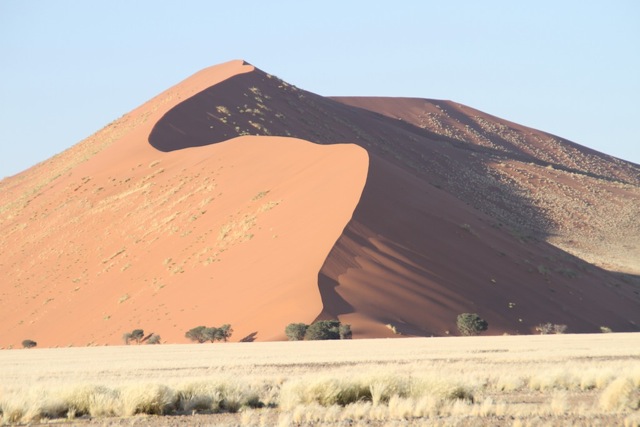
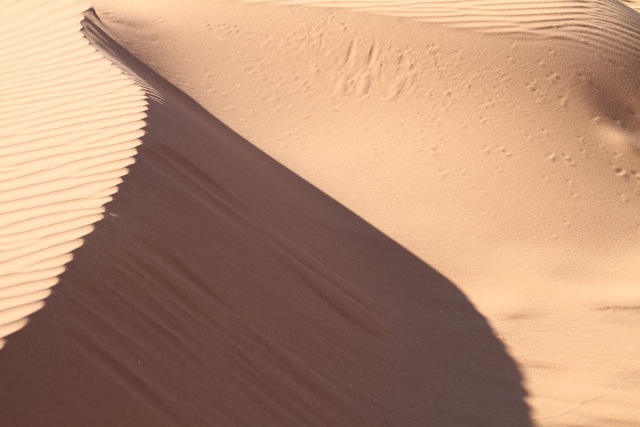
We hired an airplane so we could look down on the dunes, which run all the way from Sesriem to the Atlantic, a distance of perhaps 60 miles.
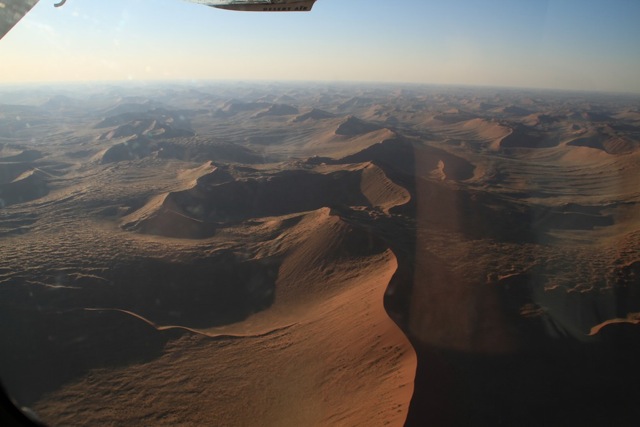
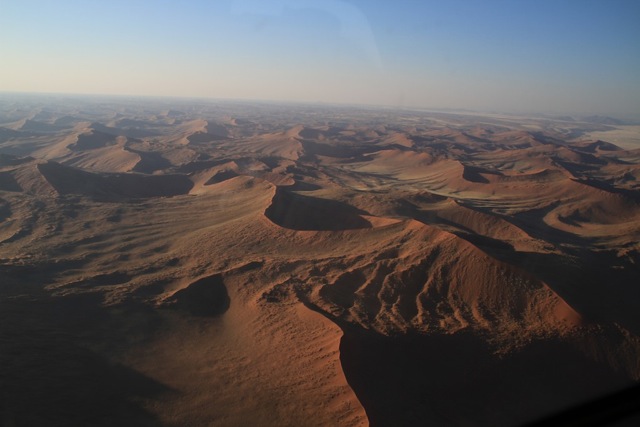
The wind typically blows from the east and creates a very dry environment. Namibia has had five years of drought, but this year they got almost twice their average rainfall. As a result, in some parts of the country the foliage is full. Although we saw a lot of animals, we were told that they were not as prevalent in populated areas because the abundance of foliage draws them away.
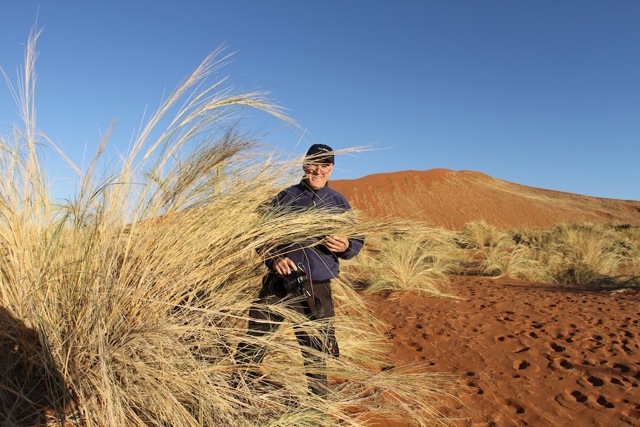
In parts of Namibia, the grass looks like a wheat field in Kansas.
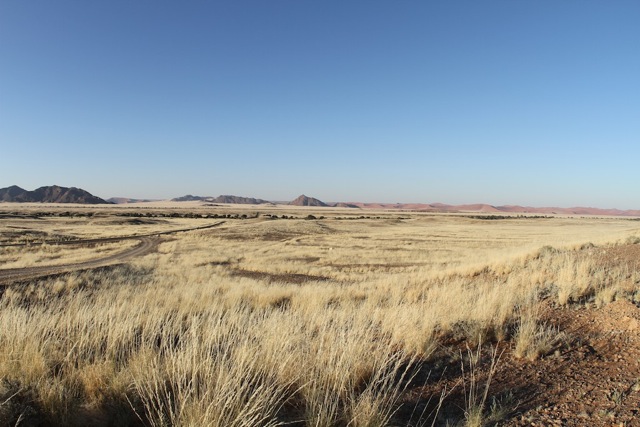
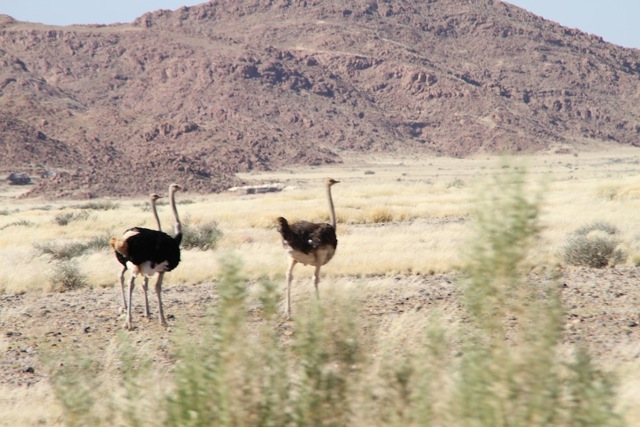
On the way to the dunes, we saw ostriches.
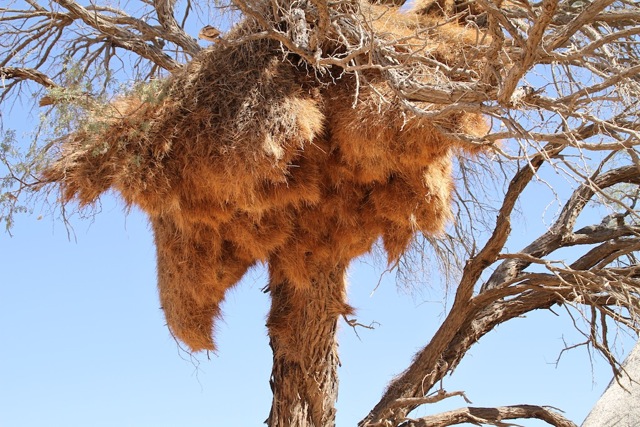
In a fascinating nest was a large colony of weaver birds. The nest was approximately 10’ x 10’ and had hundreds of birds in it. The birds, which are similar to sparrows, build and maintain these really multi-chambered nests for years—some nests could be a hundred years old. The nests are constructed of many rooms that serve different purposes—a nursery for chicks, for example, which would be insulated best to protect from the intense heat and cold of the desert.
When we left for the Atlantic coast, we ran into the same unstable road conditions: patches of soft gravel and sand.
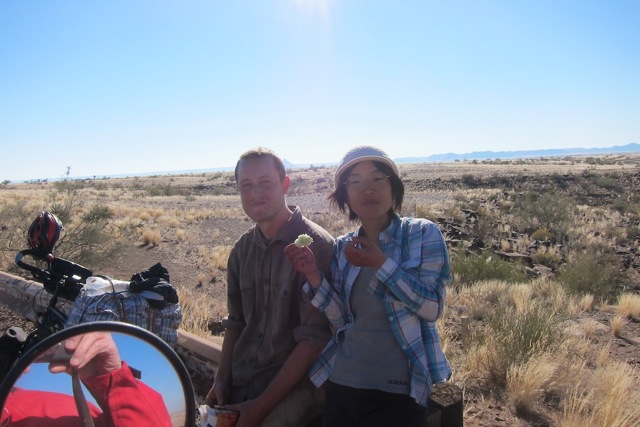
On the way we met a cute couple—a French boy and a Japanese girl who had just finished college. They were peddling their way to Japan on a bicycle!
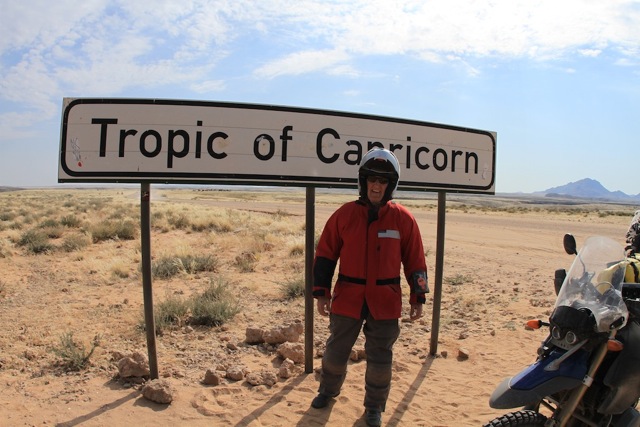
At this point, we passed the Tropic of Capricorn.
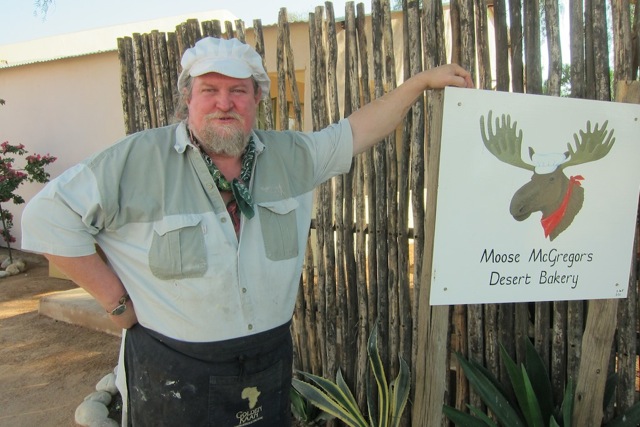
We had breakfast with this cook. His big dream is to get a Harley Davidson chopper and weld it together himself. I think he’s been watching too much TV, but his bakery was spectacular.
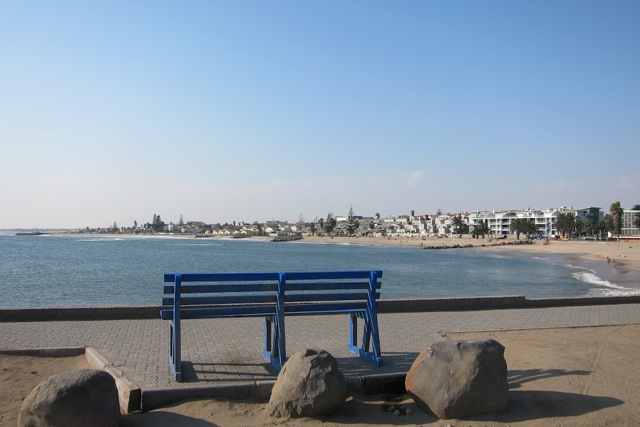
On the afternoon of June 5th, we arrived at Swakopmund, a resort town on the Atlantic coast of Namibia. We saw a beautiful waterfront with nice restaurants and lovely shopping areas but intense poverty surrounding it. The city, which was the main harbor for the imperial German colony in the 1890s, has been furthered developed because of the infrastructure demands made by the world’s largest opencast uranium mine in Rössing, 70 km away.
Tomorrow, we leave for the Rhino Camp Road, which is over 300 kilometers over horrible dirt roads. We are trying to talk Helge into renting a car to haul our luggage to lighten up the weight on our bikes, but he is resisting and we’re not making much progress!
That’s all for now.